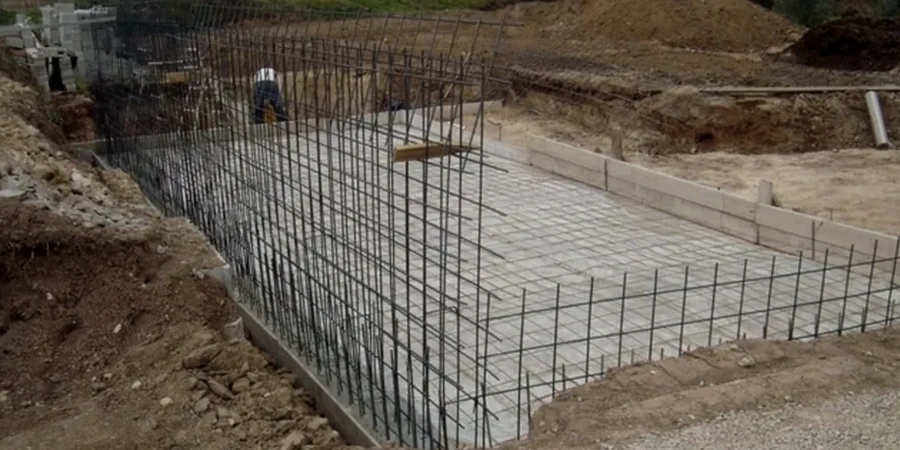
In Sioux City, we often see that the biggest misunderstanding with shallow foundations is assuming the soil will behave uniformly. The loess-covered bluffs and the Missouri River floodplain are worlds apart in terms of bearing capacity, and a footing design that works up on the bluffs near Morningside will likely fail if you just copy it down by the river. We provide a shallow foundation design approach that starts with a proper site investigation to differentiate between the Peoria Loess deposits and the alluvial sands. We’ve seen too many projects where the exploration depth was inadequate, missing a soft layer that later caused excessive differential settlement. Our team focuses on getting the stratigraphy right before we even start calculating the allowable bearing pressure, and we often pair our analysis with an in-situ permeability test when the water table is a concern for construction dewatering.
Designing a footing on Sioux City loess without a collapse potential evaluation is gambling with the structure's long-term performance.
Methodology and scope
Sioux City sits at an elevation of roughly 1,200 feet, straddling the interface between deep loess-mantled uplands and the Missouri River alluvial plain. This means your site might have 20 feet of low-plasticity silt or it might hit clean sand at three feet. Our shallow foundation design process is built around the IBC Chapter 18 requirements and the bearing capacity equations in ASCE 7. We run a full suite of laboratory index tests, including ASTM D2487 classification and Atterberg limits, to nail down the soil behavior type. For sites on the floodplain, we pay close attention to the seasonal groundwater fluctuation—it’s not uncommon for the water table to rise within five feet of the surface in the spring. We then model the settlement using both elastic and consolidation theory so you know what to expect over the design life of the structure. The goal is a footing geometry that keeps total settlement under one inch and angular distortion below 1/480, which is our typical trigger for rigid frame structures in this market.
Local ground factors
The IBC requires us to address collapsible soil in this region, and honestly, that is the main risk with shallow foundations in Sioux City. The loess has an open, meta-stable structure that can lose a significant amount of volume when it gets wet for the first time. We’ve seen settlement of four to six inches from a broken water line next to a strip footing. If you ignore this, you are asking for cracked slabs and misaligned frames. On the alluvial side, the risk shifts to scour and variable bearing strata; a footing set on a natural levee deposit might be fine, but one twenty feet away could be on a filled-in oxbow with ten feet of organic silt. Our design reports always include a specific section on subgrade preparation and moisture conditioning to mitigate collapse risk before the concrete is placed.
Common questions
What is the typical cost for a shallow foundation design report for a single-family home in Sioux City?
For a typical residential lot with a standard exploration and bearing capacity analysis, the fee runs between US$1,930 and US$2,820. The final cost depends on the number of borings required and whether we need to run collapse potential testing on the loess.
How deep do footings need to be in Sioux City?
The IBC mandates a minimum depth of 42 inches below finished grade to get below the frost line. That said, we usually have to go deeper if we are trying to get through poor near-surface fill or if we are trying to seat the footing in a dense, competent stratum that can give us the required bearing capacity.
Do you design mat foundations for commercial buildings on the floodplain?
Yes, we do. On the Missouri River alluvial plain, a mat or raft foundation is often the most practical solution because it bridges small zones of variable compressibility and reduces differential movement. We design the mat stiffness and reinforcement based on a modulus of subgrade reaction derived from our plate load tests or SPT correlations.