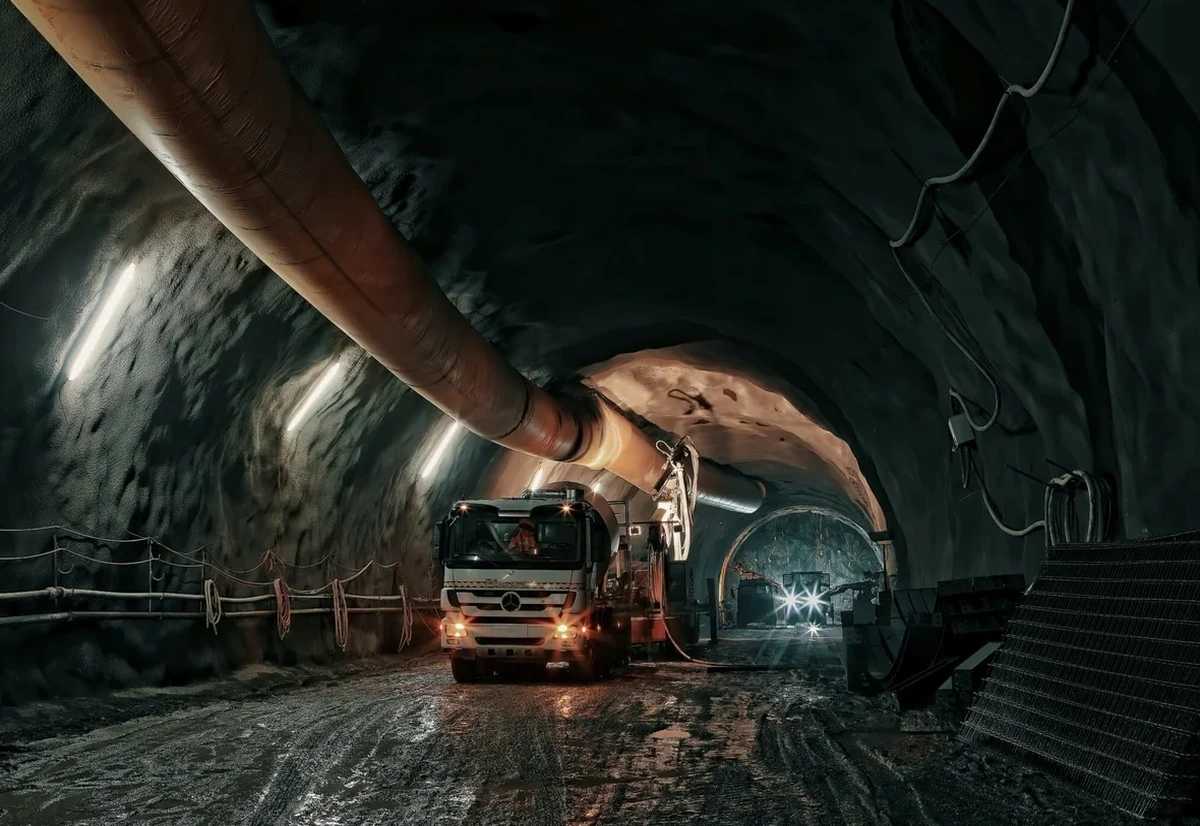
A contractor recently called us after hitting saturated silt at 15 feet along the Missouri River floodplain. They had dewatering pumps running nonstop and the TBM advance rate dropped to half a meter per shift. That's the reality of tunneling through Sioux City's alluvial deposits—layers of fat clay, loose sand, and organic silt that don't show up uniformly in a desktop study. We ran triaxial CU tests on undisturbed Shelby tube samples and the effective friction angle came back at 26 degrees with cohesion under 200 psf. The cpt test data we pushed the week before had already flagged the weak zone, but the lab numbers gave the contractor the exact stand-up time and face pressure parameters to adjust the EPB machine. Sioux City sits on a complex sequence of Missouri River sediments overlying Cretaceous shale, and every alignment through soft ground here demands a testing program that captures the rapid lateral variability. Our lab processes samples within 48 hours so the tunnel engineer isn't making decisions on stale data.
Saturated Missouri River alluvium can lose 60% of its undrained shear strength under cyclic loading—if your tunnel face pressure doesn't account for that, you'll daylight a sinkhole.
Common questions
What laboratory tests are essential for a soft ground tunnel through Missouri River alluvium?
The core suite includes ASTM D2487 soil classification, Atterberg limits, consolidated-undrained triaxial with pore pressure measurement (ASTM D4767), and incremental oedometer consolidation. For Sioux City's sensitive clays we add unconfined compression on undisturbed samples to quantify sensitivity. When the alignment crosses sand lenses, grain size distribution and minimum/maximum density tests provide input for liquefaction screening under ASCE 7 seismic loads.
How do Sioux City's freeze-thaw cycles affect soil parameters for tunnel design?
Repeated freeze-thaw can reduce the undrained shear strength of the upper 5 to 8 feet of loess-derived soils by 20 to 30 percent and increase hydraulic conductivity by an order of magnitude due to ice lensing and subsequent thaw consolidation. We recommend sampling in late winter and late summer to bracket the seasonal range, particularly for shallow utility tunnels and cut-and-cover sections.
What is the typical cost range for a geotechnical laboratory testing program for a soft soil tunnel project in Sioux City?
A complete laboratory testing program for a soft ground tunnel alignment typically ranges from US$4,480 to US$18,620 depending on the number of boreholes, sample depth intervals, and the specific testing suite required. A short pedestrian tunnel with 3 to 4 boreholes and basic classification falls toward the lower end, while a full TBM alignment with advanced triaxial, consolidation, and dynamic testing across 10 to 15 borings reaches the upper end of the range.
How quickly can the lab deliver triaxial results once samples arrive from the field?
Standard consolidated-undrained triaxial tests with pore pressure measurement require 5 to 7 working days from sample setup to final report. We can expedite to 3 days for critical face stability decisions by running multiple cells in parallel. Consolidation tests on soft Sioux City clays typically need 7 to 10 days due to the low coefficient of consolidation, and we don't rush the load increments because under-consolidated data produces unconservative settlement predictions.