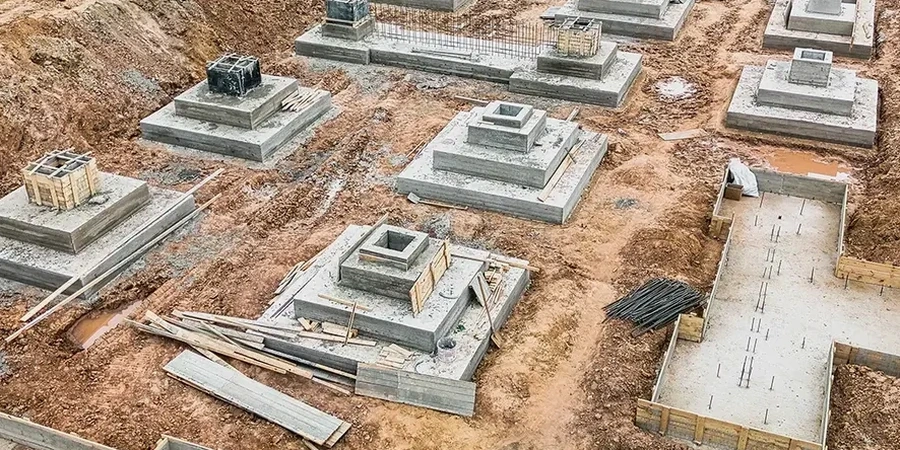
Sioux City sits at an elevation of 1,135 feet on the Missouri River bluffs, where the underlying geology demands precision in deep foundation work. The river's historical flood stages—reaching 35.3 feet in 2011—and the thick loess deposits across Woodbury County create variable bearing conditions that shallow footings cannot reliably address. For structures requiring load transfer through weak surficial soils to competent strata, pile foundation design becomes the logical solution. Our laboratory processes soil samples from local borings and applies site-specific parameters to develop pile capacities. We correlate field data from SPT drilling with lab index testing to define skin friction and end bearing values for driven piles and drilled shafts. The goal is a foundation that performs under both normal service loads and the seismic demands outlined in ASCE 7 for this region.
Loess collapse and Missouri River scour are the two design conditions that govern pile embedment depth in Sioux City.
Relevant standards
IBC 2021 (adopted by Sioux City), ASCE 7-22 Minimum Design Loads, ASTM D1586 Standard Penetration Test, ASTM D2487 Soil Classification, ASTM D5333 Collapse Potential of Soils, AASHTO LRFD Bridge Design (9th Ed.), FHWA HEC-18 Scour at Bridges
Common questions
What pile types are most common in Sioux City's loess soils?
Driven H-piles and drilled shafts are typical. H-piles can be driven to refusal on shale bedrock. Drilled shafts work well where vibration near existing structures is a concern. Micropiles are an option for limited-access sites on the bluffs.
How does loess affect pile foundation design?
Loess can collapse when it gets wet, creating negative skin friction—a downward drag load on the pile shaft. We test undisturbed samples for collapse potential per ASTM D5333 and design the pile to carry this additional load without exceeding allowable settlement.
How much does pile foundation design cost in Sioux City?
Engineering fees for pile design, including the boring program, lab testing, and capacity calculations, typically range from US$1,670 to US$6,160 depending on the number of borings, pile count, and whether scour or seismic analysis is required.
What depth do piles need to reach in the Sioux City area?
Piles generally extend 40 to 70 feet to reach dense glacial till or shale. The exact depth is determined by boring logs and lab strength data. Bridge piles near the Missouri River go deeper to account for scour.