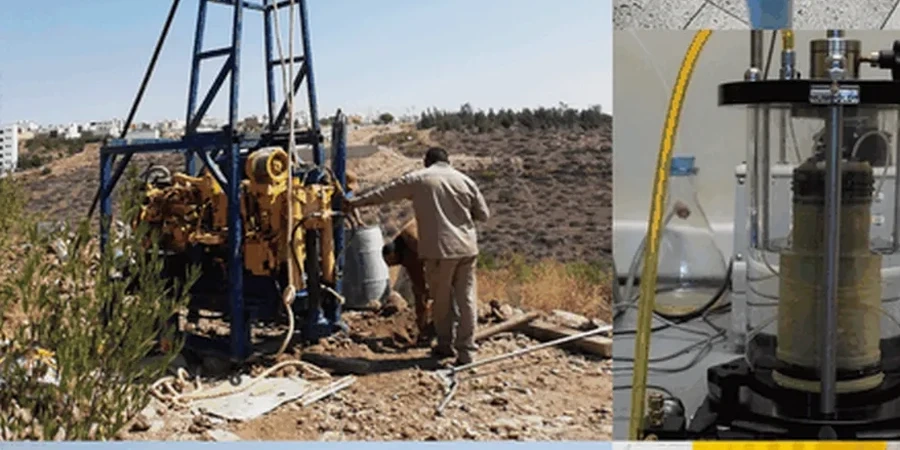
Sioux City sits at an elevation of roughly 1,200 feet along the Missouri River, where the bluffs and floodplain create two very different geotechnical profiles within the same city limits. A soil mechanics study here is not a generic report—it has to distinguish between the loess-covered uplands and the alluvial deposits in the valley, because the bearing behavior changes by an order of magnitude across a distance of half a mile. Our team runs the full suite of index and strength tests under ASTM D2487 and D1586, pairing field data from SPT drilling with triaxial and consolidation work in the lab, so the foundation engineer gets a complete stress-strain picture before the first yard of concrete is poured. That level of detail is what turns a standard geotechnical investigation into a reliable basis for design, particularly in a city where the water table fluctuates seasonally and can rise to within six feet of grade in the bottomlands.
In Sioux City, the difference between a 3-foot spread footing and a 60-foot pile group often comes down to a single consolidation test on a five-inch Shelby tube sample.
Methodology and scope
The geology beneath Sioux City is dominated by Pleistocene loess on the ridges and Missouri River alluvium in the valley, but the transition zone along the bluff slope introduces a third condition—colluvium mixed with weathered shale from the underlying Cretaceous Dakota Formation. A shallow footing on the ridge might mobilize 4,000 psf without issue, yet the same project footprint shifted 300 yards east onto valley fill could require deep foundations or ground improvement to stay within tolerable settlement. Our soil mechanics study addresses this variability by running Atterberg limits, grain-size distribution, and unconfined compression on every distinct stratum encountered, then cross-referencing those results with SPT N-values to build a layered bearing-capacity profile. We also run one-dimensional consolidation tests when the stratigraphy includes compressible clays, because even a three-story structure on the floodplain can experience differential settlement that cracks partition walls if the secondary compression component is underestimated. The lab data feeds directly into the geotechnical model, so the structural engineer is not forced to rely on conservative assumptions that inflate construction cost.
Relevant standards
ASTM D1586 – Standard Test Method for Standard Penetration Test (SPT) and Split-Barrel Sampling of Soils, ASTM D2487 – Standard Practice for Classification of Soils for Engineering Purposes (Unified Soil Classification System), ASTM D2435 – Standard Test Methods for One-Dimensional Consolidation Properties of Soils Using Incremental Loading, ASTM D4767 – Standard Test Method for Consolidated Undrained Triaxial Compression Test for Cohesive Soils, IBC 2021 – International Building Code, Chapter 18: Soils and Foundations, ASCE 7-22 – Minimum Design Loads and Associated Criteria for Buildings and Other Structures
Common questions
How long does a full soil mechanics study take in Sioux City from mobilization to final report?
For a typical commercial lot in Woodbury County, field work including SPT borings and sampling is completed in two to three days. Laboratory testing for classification, strength, and consolidation runs approximately ten to fourteen business days depending on the number of samples and whether consolidation tests are required. The final geotechnical report is delivered within three weeks of completing field operations, though we can expedite the lab and reporting phases for projects with tight permit deadlines.
What is the cost range for a soil mechanics study on a residential or light commercial site in Sioux City?
Most projects in the Sioux City area fall between US$3,270 and US$5,310, depending on the number of borings, the depth of investigation, and the laboratory tests required. A single-family residential lot with two borings and basic classification testing will be at the lower end of that range, while a commercial site requiring consolidation and triaxial testing on multiple Shelby tube samples will approach the upper end.
Does the report address frost depth and seasonal groundwater conditions specific to Sioux City?
Yes. Sioux City’s design frost depth of 42 inches is incorporated into all foundation and pavement recommendations, and we document the stabilized groundwater level observed during drilling. Because the Missouri River stage and local precipitation affect the shallow water table seasonally, we also include guidance on dewatering expectations and the potential for buoyancy effects on buried structures during spring high-water conditions.